
Tennessee NP Programs at a Glance
| State practice authority | Restricted Practice – NPs practice under physician supervision agreement |
| Tennessee Board of Nursing | Tennessee Board of Nursing |
| Tennessee median NP wage | ~$110,000 (Payscale/BLS, 2024). See Tennessee state OES tables for current detail. |
| National median NP wage | $129,210/year (BLS, May 2024) |
| Projected NP job growth | 46% (2023–2033) nationally – one of the fastest-growing professions |
| Primary accreditors | CCNE · ACEN |
| Common NP specialty tracks | FNP, AGNP (Primary/Acute), PMHNP, PNP, WHNP, NNP |
| Typical program length | 2–3 years (MSN-NP) or 3–4 years (BSN-to-DNP), full-time post-BSN |
Our Editorial Process
This guide is written by a credentialed nurse and reviewed against source-of-truth references at least annually. Program accreditation is verified against the CCNE program directory and ACEN directory. Tennessee licensure information is verified against the Tennessee Board of Nursing. Salary and growth figures come directly from the Bureau of Labor Statistics Tennessee data. Read our full editorial standards.
2026 Updates for Tennessee NP Programs
- Tennessee practice authority. Tennessee is a Restricted Practice authority state. NPs must practice under a physician supervision or delegation agreement throughout their career. Bills expanding NP scope have advanced periodically but have not yet shifted Tennessee to full or reduced practice authority.
- BLS data refresh (May 2024 OES). National median NP wage is now $129,210; Tennessee-specific data is published in the Tennessee state OES tables.
- Projected NP job growth. 46% projected employment growth from 2023 to 2033 nationally – one of the fastest-growing occupations the BLS tracks.
- AACN 2025 Position Statement. The American Association of Colleges of Nursing reaffirmed the DNP as the preferred terminal degree for advanced practice. BSN-to-DNP and post-master’s DNP pathways continue to be the dominant educational routes for new NPs in Tennessee.
- Telehealth permanence. Federal and state telehealth flexibilities introduced during 2020 have largely been made permanent, expanding remote NP roles across primary care, behavioral health, and chronic disease management.
- PMHNP demand surge. Mental health workforce shortages are particularly acute nationwide; PMHNP-specific job postings have outpaced general NP postings consistently. See our PMHNP career guide.
It’s estimated that Tennessee will be short about 6,000 physicians by 2030, about 1,100 primary care doctors. As in many states, nurse practitioners are poised to step in and act as primary care providers for patients of all ages, ensuring Tennesseans get the care they need.
Tennessee offers nurse practitioners many opportunities to join professional organizations and network with other nursing professionals, like the Tennessee Nurse Practitioner Association, the Tennessee Council of Advanced Practice Nurses, the Tennessee Nurses Association, and regional groups, like the Chattanooga Area Nurses in Advanced Practice, Greater Memphis Area Advanced Practice Nurses, and West Tennessee Nurse Practitioners Alliance.
Many of the large hospitals are in Nashville, including Vanderbilt University Medical Center, Ascension Saint Thomas, and TriStar Centennial Medical Center, but there are impressive healthcare systems all around the state. In Memphis, there are Methodist Hospitals and Baptist Memorial. Knoxville has the University of Tennessee Medical Center and Parkwest Medical Center, and Chattanooga is home to CHI Memorial Hospital and Erlanger Medical Center.
If you’re considering working in Tennessee, you’ll appreciate the range of exciting things to occupy your free time. Outdoor lovers and adventure seekers can explore the Great Smoky Mountains, take a scenic drive on the Natchez Trace Parkway, or travel 140 miles below the ground to see the Lost Sea. For a taste of city life, head to Memphis or Nashville, and to show your respect to some of the best in country music, head on over to Graceland or Dollywood or explore the Country Music Hall of Fame.
Here are some of the top colleges and universities in Tennessee where you can pursue nurse practitioner degrees.

Program Overview:
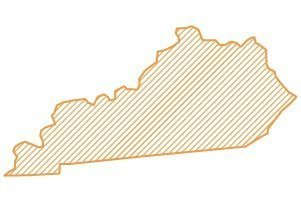
Austin Peay State University has its main campus in Clarksville, about 50 miles northwest of Nashville, close to the Kentucky state line, with a second location in Fort Campbell, KY. It’s named after Austin Peay, who was from Clarksville and the state’s governor from 1923 to 1927. The APSU School of Nursing features a Nursing Simulation Center that provides students the opportunity to experience hands-on learning covering a range of patient conditions, medications, and treatments. APSU offers one NP program:

Program Overview:
This Memphis university has been educating students since 1912. Baptist Health Sciences University is a private school focusing on health sciences and is committed to Christian values and ethics. It works in partnership with Baptist Memorial Health Care, extending learning beyond the classroom. The Division of Nursing offers two DNP programs for those wanting to pursue an AGNP career.

Program Overview:
Belmont University in Nashville is home to the Gordon E. Inman College of Nursing. The college has the first accredited simulation center in the state. It is one of only 79 institutions designated as a Center of Excellence in Nursing Education by the National League for Nursing. Nashville offers many opportunities for clinicians and hands-on learning at major health facilities. It also has a 100% pass rate for the FNP Certification on the first attempt since the program began. Belmont offers the following two NP options:

Program Overview:
Founded in 1851, Carson-Newman University is a Christian liberal arts school located in Jefferson City, about 30 miles northeast of Knoxville. It’s been recognized as one of the best-value schools in the region. Carson-Newman University boasts a 96% certification exam pass rate for FNP graduates and offers two NP tracks:

Program Overview:
Located near the mountains in Johnson City, East Tennessee State University’s School of Nursing has roots going back to 1911. The school offers several NP programs on its own and several joint DNP programs with Tennessee Tech University. ETSU boasts a 98% Pass rate on FNP Certification for 2020. The following programs are offered either at ETSU or in partnership with TTU.

Program Overview:
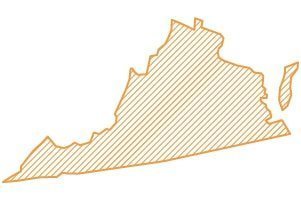
King University is a private Presbyterian-affiliated university in Bristol, in the northeast corner of the state on the Virginia border. Founded in 1867, the university’s nursing program promotes diversity, social tolerance, and justice. FNP students have a FNP board pass rate of 89%. It offers the following two NP programs:

Program Overview:
Lee University is a private university in the foothills of the Appalachian Mountains. Since its founding in 1918, it has become one of Tennessee’s largest Christ-centered private institutions. The nursing school was not established until 2014, and it began with a BSN program. It’s continued to expand its programs since then and offers one FNP DNP program.

Program Overview:
Lincoln Memorial University was founded in 1897 as a memorial to Abraham Lincoln. It is located in Harrogate, where Virginia, Kentucky, and Tennessee meet at the Cumberland Gap. The Caylor School of Nursing has been preparing nurses for more than 50 years and has an 88% percent pass rate for the FNP licensure exam. Students interested in this school have two NP options:

Program Overview:
Middle Tennessee State University sits at the geographic center of the state. It opened in 1911 as a teacher’s college; today, it offers more than 300 unique programs of study. The school of nursing opened in 1966 with a single two-year associate’s degree program. Those interested in an NP program have one option here:

Program Overview:
Just west of Chattanooga in College Dale is Southern Adventist University. It was established by the Seventh-day Adventist Church and builds its educational programs on the church’s worldview and beliefs. The school of nursing offers a range of high-tech learning options, including skills and assessment labs, simulation labs, and a 68-computer station resource center. Southern Adventist University offers the following nine options for pursuing an NP degree.

Program Overview:
An HBCU, Tennessee State University was founded in 1912 and is designated as a “high research” institution by the Carnegie Classification of Institutions of Higher Education. It has two campuses in Nashville, one in a residential neighborhood along the Cumberland River and the Avon Williams campus downtown.

Program Overview:
Located right between Nashville and Knoxville, Tennessee Tech University prepares students to succeed in a tech-driven world. The Whitson-Hester School of Nursing offers NP programs on campus, and TTU also partnered with East Tennessee State University to offer hybrid DNP degrees. The following nine options are available:
- BSN to FNP
- BSN to FNP DNP TTU-ETSU
- BSN to DNP AGNP Acute Care (TTU-ETSU)
- BSN to DNP AGNP Acute Care (TTU-ETSU)
- BSN to DNP PNP Primary Care (TTU-ETSU)
- BSN to DNP PNP Primary Care )TTU-ETSU)
- Post-Graduate Certificate MSN to FNP
- Post-Graduate Certificate MSN to AGNP Acute Care
- Post-Graduate Certificate PNP

Program Overview:
Tusculum University is a Christian university built on a Presbyterian heritage. The College of Nursing’s graduate program was established in 2016 with its FNP program, and the first graduating class scored a 100% pass rate on the national certification exam. This program is still offered today. There are three options at Tusculum:

Program Overview:
A private, Christian, liberal arts-based university, Union University has multiple campuses across Tennessee, with its main campus in Jackson. The College of Nursing and Health Sciences offers a 10:1 student-to-faculty ratio and provides students a chance to get hands-on experience in a state-of-the-art simulation lab. It boasts a 100% exam pass rate for NPs in the following specialties:

Program Overview:
The University of Memphis is a major research institution that sits in a small residential neighborhood in Memphis with a second location in Lambuth. The Loewenberg College of Nursing provides students on both campuses with state-of-the-art technology and resources, including eight teaching labs with fully functioning simulator manikins, recreating a real-world setting where students can practice everything from checking blood pressure to inserting IVs to delivering a baby. UofM offers two FNP tracks:

Program Overview:
UT Knoxville is a part of the larger University of Tennessee educational system and serves as the flagship campus. The College of Nursing was established 1971, and in 2015, it established the Center for Nursing Practice, which aims to promote healthy communities through nurse-managed and nurse-led care. UT Knoxville offers the following six NP programs:

Program Overview:
Since its founding as Chattanooga University in 1886, the University of Tennessee at Chattanooga has grown exponentially. Today, it’s home to five colleges, one of which is the College of Health, Education, and Professional Studies, home to the university’s nursing program. The nursing program was established in 1973, with the FNP program added in 1995 and the AGNP degree added in 2016.
Program Overview:
The University of Tennessee Health Science Center also serves as a statewide academic health system with four different campuses: Memphis, Knoxville, Chattanooga, and Nashville. The College of Nursing goes back to 1898 and was the first college of nursing in the state. This school is designated a Center of Excellence by the National League for Nursing and offers 12 NP options:
- BSN to DNP FNP
- BSN to DNP AGNP Acute Care
- BSN to DNP FNP/AGNP Dual Concentration
- BSN to DNP FNP/Mental Health Dual Concentration
- BSN to DNP PNP Acute Care
- BSN to DNP PNP Primary Care
- BSN to DNP PNP Acute/Primary Care Dual Concentration
- Post-Graduate Certificate MSN to AGNP Acute Care
- Post-Graduate Certificate DNP to FNP
- Post-Graduate Certificate DNP to PNP Acute Care
- Post-Graduate Certificate DNP to PNP Primary Care

Program Overview:
Founded in 1873, Vanderbilt University has ten different schools and colleges on its Nashville campus. The Vanderbilt University School of Nursing dates back to 1908 and began offering MSN degrees in 1955. The FNP program began in 1975 and, according to Vanderbilt, “is considered among the oldest and most progressive in the country.” Today, it offers a dozen options for those wishing to pursue an NP degree.
- BSN to FNP
- BSN to DNP FNP
- BSN to AGNP Acute Care
- BSN to AGNP Primary Care
- BSN to DNP AGNP Acute Care
- BSN to PNP Acute Care
- BSN to PNP Primary Care
- Post-Graduate Certificate MSN to FNP
- Post-Graduate Certificate MSN to AGNP Acute Care
- Post-Graduate Certificate MSN to AGNP Primary Care
- Post-Graduate Certificate MSN to PNP Acute Care
- Post-Graduate Certificate MSN to PNP Primary Care
Educational Routes to Becoming a Nurse Practitioner in Tennessee
Five distinct routes appear across the NP schools listed on this page. Each suits a different starting credential and timeline. All five satisfy the Tennessee Board of Nursing APRN-certification requirements when paired with national NP certification.
1. MSN-NP (Most Common Route)
The traditional Master of Science in Nursing with an NP specialty track. Designed for working RNs who already hold a BSN. Typical length: 2 to 3 years full-time or 3 to 4 years part-time, with 500 to 750 clinical hours. Tennessee MSN-NP options span all 18 on-page schools. Vanderbilt and the UT system (UT Knoxville, UT Chattanooga, UT Health Science Center) anchor research-focused tracks; Belmont, Lincoln Memorial, and Carson-Newman run hybrid MSN-FNP coursework for working RNs statewide.
2. RN-to-MSN Bridge (No BSN Required)
For ADN-prepared RNs who want to skip a separate BSN program. The bridge adds 12 to 18 months of BSN-level coursework before the master’s component begins. In Tennessee, East Tennessee State University, Middle Tennessee State, and Tennessee State University all offer RN-MSN bridges into NP tracks. Total time-to-degree typically lands at 3 to 4 years. See the broader top RN-to-NP programs ranking.
3. BSN-to-DNP (Doctoral-Entry NP)
Aligned with the AACN’s 2025 DNP position statement. Combines NP-specialty training with terminal-degree coursework over 3 to 4 years and roughly 1,000 clinical hours. 15 Tennessee schools offer a DNP program — see the full Tennessee DNP programs guide for state-specific detail, or online BSN-to-DNP programs for ranked national options.
4. Post-Master’s Certificate (Existing MSN Holders)
For nurses who already hold a master’s-level NP credential and want to add a second specialty — an FNP adding AGNP, an FNP adding PMHNP, etc. Typical length: 12 to 24 months and ~500 clinical hours. Tennessee post-master’s certificate options include Vanderbilt, University of Tennessee Health Science Center, ETSU, and Belmont. The NP Certifications hub covers the certificate landscape in depth.
5. Accelerated & Direct-Entry (Non-Nursing Bachelor’s)
For career changers with a bachelor’s degree in a non-nursing field. The student earns an accelerated BSN first (12 to 16 months), then enters an NP master’s or DNP track. Tennessee’s flagship direct-entry options include Vanderbilt’s Pre-Specialty Master’s and the University of Tennessee’s Master of Science in Nursing Entry pathway. Total time-to-NP-licensure: typically 4 to 5 years from start of accelerated BSN.
Fast & Affordable Tennessee NP Programs (Editorial Picks)
These editorial picks balance time-to-degree, total program cost, and accreditation. All programs listed are CCNE or ACEN accredited and confirmed to currently enroll Tennessee residents.
Fastest Tennessee NP Programs
- Lincoln Memorial University — Online MSN-FNP: Multiple intakes per year; accelerated track for working RNs across East Tennessee.
- Union University — MSN-FNP: Compressed full-time option that finishes in roughly 24 months; Jackson and Hendersonville campuses.
- Belmont University — MSN-FNP: Nashville-based hybrid delivery with cohort entry twice yearly.
- Vanderbilt University — Post-Master’s NP Certificate: 12 to 18 months for current MSN holders adding a Tennessee specialty.
Most Affordable Tennessee NP Programs (In-State Tuition)
- Tennessee State University — MSN-FNP: Public Tennessee Board of Regents tuition at one of the lowest published per-credit rates; HBCU in Nashville.
- East Tennessee State University — MSN-NP: Public TBR-system tuition in Johnson City with strong Tri-Cities clinical network.
- Middle Tennessee State University — MSN-FNP: Public TBR tuition in Murfreesboro; competitive Nashville-area cohort sizes.
- Austin Peay State University — MSN-FNP: Public TBR tuition in Clarksville; Fort Campbell military-clinical pipeline.
- University of Tennessee Knoxville — MSN-NP: Public flagship tuition with strong primary-care preceptor network.
Tennessee Schools Offering Popular NP Specialties
The matrix below maps Tennessee NP-track schools to the two most-published specialty paths in the state — FNP and DNP entry. Most Tennessee schools lead with FNP at the master’s level; 15 schools offer a Doctor of Nursing Practice option. Each H3 links to the relevant child page.
Family NP (FNP)
The most common specialty in Tennessee. All 18 schools listed on this page offer an FNP track in some format — MSN, BSN-to-DNP, or post-master’s certificate.
- Austin Peay State University
- Baptist Health Sciences University
- Belmont University
- Carson-Newman University
- East Tennessee State University
- King University
- Lee University
- Lincoln Memorial University
- Middle Tennessee State University
- Tennessee State University
- Tennessee Tech University
- Tusculum University
- Union University
- University of Memphis
- University of Tennessee Knoxville
- University of Tennessee at Chattanooga
- University of Tennessee Health Science Center
- Vanderbilt University
BSN-to-DNP and Post-Master’s DNP Programs in Tennessee
Aligned with the AACN 2025 DNP position statement. The 15 Tennessee schools below offer a Doctor of Nursing Practice program. See the dedicated Tennessee DNP programs guide for admissions detail.
- Baptist Health Sciences University
- Belmont University
- King University
- Lincoln Memorial University
- South College
- Southern Adventist University
- Tennessee Technological University
- Union University
- University of Tennessee
- University of Tennessee-Chattanooga
- University of Tennessee-Health Science Center
- Carson-Newman University
- East Tennessee State University
- Lee University
- Vanderbilt University
Nurse Practitioner Programs in Tennessee by City & Region
Tennessee’s 18 featured NP schools cluster around six regions: Nashville and Middle Tennessee, Memphis and West Tennessee, Knoxville and East Tennessee, the Tri-Cities (Johnson City/Kingsport/Bristol), Chattanooga and Southeast Tennessee, and the Upper Cumberland (Cookeville). Several private universities anchor smaller-town markets between metros.
Nashville / Middle Tennessee
- Vanderbilt University — Nashville
- Belmont University — Nashville
- Tennessee State University — Nashville
- Lipscomb University — Nashville (no on-page card)
- Middle Tennessee State University — Murfreesboro
- Austin Peay State University — Clarksville
Memphis / West Tennessee
- University of Tennessee Health Science Center — Memphis
- University of Memphis — Memphis
- Baptist Health Sciences University — Memphis
- Union University — Jackson
Knoxville / East Tennessee
- University of Tennessee Knoxville — Knoxville
- Carson-Newman University — Jefferson City
- Lincoln Memorial University — Harrogate
- Tusculum University — Greeneville
Tri-Cities
- East Tennessee State University — Johnson City
- King University — Bristol
Chattanooga / Southeast TN
- University of Tennessee at Chattanooga — Chattanooga
- Southern Adventist University — Collegedale (DNP only)
- Lee University — Cleveland
Upper Cumberland
- Tennessee Tech University — Cookeville